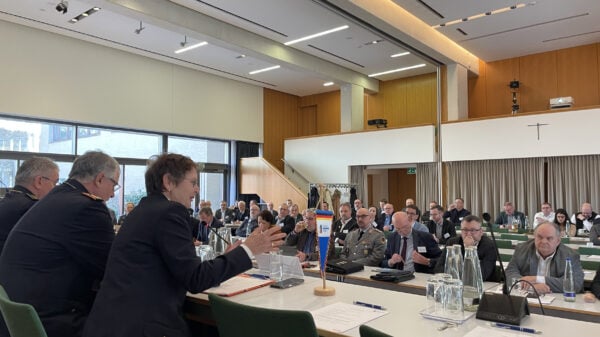
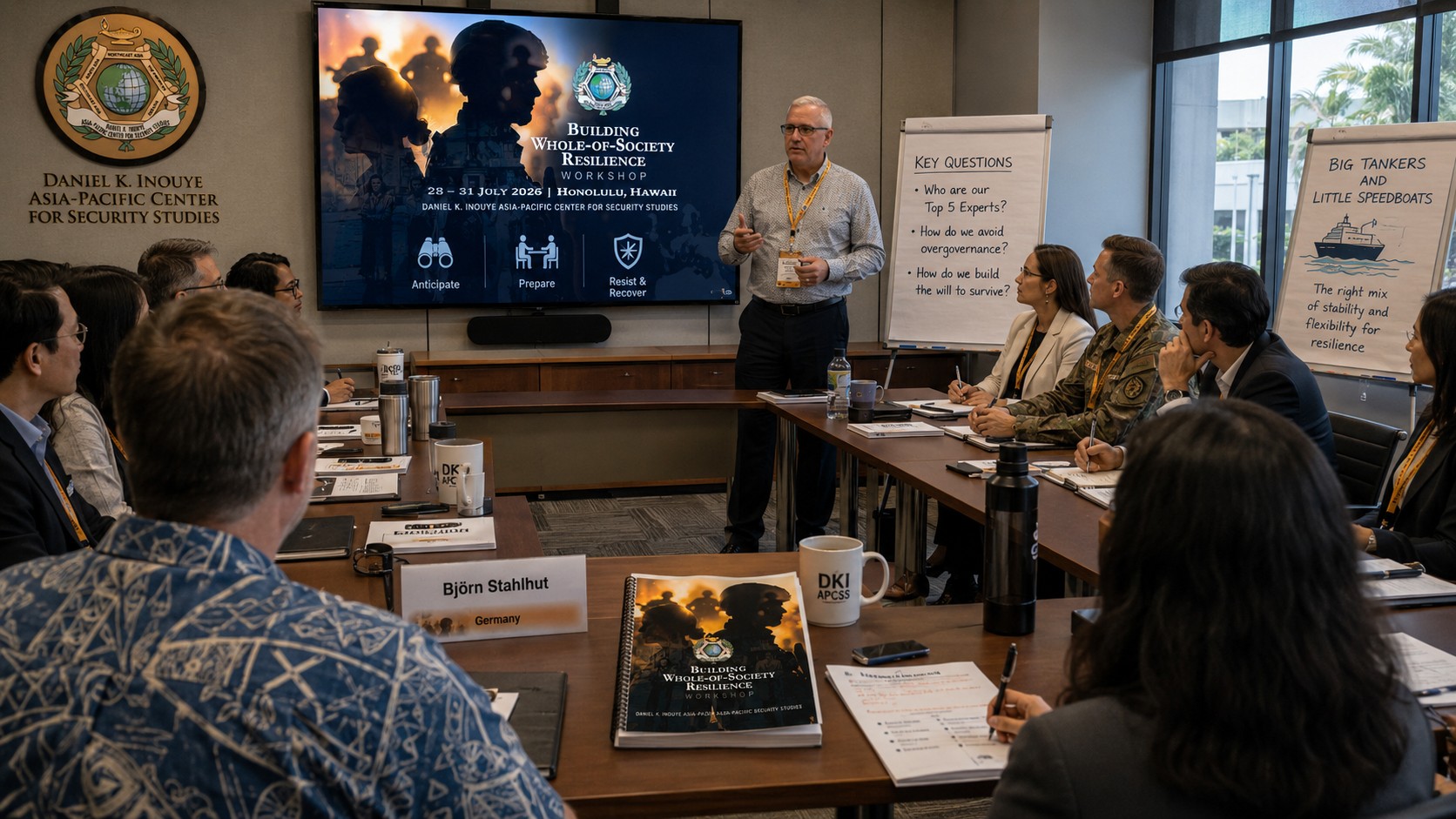
“Whole of Society Resilience” once again framed this year’s workshop at the Daniel K. Inouye Asia-Pacific Center for Security Studies (DKI APCSS) in Honolulu. Last year, we discussed “Whole of Society Resilience to Hybrid Threats: The Role of Civil Preparedness.” This year Prof. Dr. Sam Mullins and his team took the discussion one step further: Resilience, Resistance, and Deterrence.
Once again, DKI APCSS brought together exactly the kind of international group needed for such a conversation. I left Honolulu with pages of notes and even more food for thought. And with some uncomfortable questions.
Because resilience looks different when you stop discussing it only against the backdrop of crisis and start thinking about occupation.
Overgovernance
One term appeared very early in our discussions: overgovernance. And, interestingly, it was quickly associated with Europe and particularly with Germany.
Participants from very different parts of the world seemed to share the impression that Germany may be overregulated even when it comes to societal preparedness. We have highly organized civil protection structures. But how much room do we leave for additional groups, informal networks and local initiatives to emerge, organize and contribute when circumstances require them?
Do we regulate our preparedness so thoroughly that we sometimes limit the very adaptability it requires? That is a question worth exploring.
Another question concerns the scenarios we use when thinking about future crises and conflicts.
In the military domain, scenario-based thinking is well established. In the civilian domain, however, our mental images often remain surprisingly conventional. We Europeans still tend to imagine that we only need stronger conventional forces to defend our ports against the expected fleet of gray adversary warships.
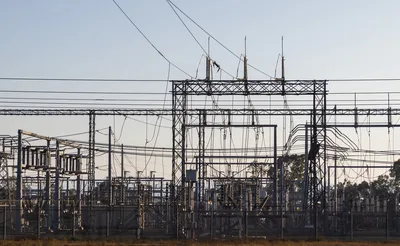
But what if the adversary is already buying our ports? How do we defend critical infrastructure that may no longer even belong to us? This leads to an even broader question: What role should the population itself play?
“We don’t need one grand Resistance Strategy. We need Resistors.”
One of the strongest ideas I took away from Honolulu is that we may not need one grand, centralized “Resistance”-concept as much as we need thousands of “Resistors” throughout society: people, networks, communities, companies and institutions capable of strengthening cohesion, adaptability and the capacity to resist wherever they are.
Which raises another deceptively simple question: Who are the five people in Germany who could most significantly increase our society’s capacity for resistance? Do we even have a methodology for identifying them?
My impression is that we instinctively assume they must be sitting somewhere in our highest federal or state authorities or their subordinate agencies. I don’t think they are. And perhaps that assumption itself is part of the problem.
One of the most thought-provoking moments of the workshop came during a morning-long Matrix Game in which I became part of a fictional Taiwanese government in exile: democratically legitimate, driven from its country and replaced by a puppet government.
Suddenly, these questions were no longer abstract. The question became:
What happens when people see their democratic system collapsing? And, more importantly: What must we do long before that moment to ensure that society does not collapse with it?
A Resilient Society Ready to Resist
For Germany, there is an important lesson here: we should resist the instinct to design an elaborate regulatory framework for every aspect of resistance. Experience from other countries suggests that too many rules, mechanisms and layers of control can become a weakness rather than a strength.
A community of resistance needs room to act. And that room needs to exist before the crisis, in everyday life.
Because any serious adversary will not attack our society randomly. They will observe us, study us and prepare. They will identify our vulnerabilities and exploit them deliberately.
This also means abandoning another outdated image: occupation does not necessarily have to mean tanks controlling every street and an adversary physically occupying an entire country. There may also be forms of “micro-occupation”: economic, technological, cultural, informational or otherwise.
Influence and control can take many forms. And this brings me to perhaps the most fundamental question of all:
How do we build a society that has the will to survive? We need to trust society with more responsibility today. We need to stop creating the impression that the state can regulate, organize and provide everything.
The German constitutional scholar and former Federal Constitutional Court Justice Ernst-Wolfgang Böckenförde famously argued that the liberal, secularized state depends on prerequisites that it cannot itself guarantee.
That thought becomes remarkably tangible in this context. Societal resilience is the prerequisite for effective resistance.
“People want to feel needed.”
But a society will not become stronger if people no longer feel that they matter. And Germany has a growing number of people who feel that the modern world no longer needs them. That is not merely a social issue. It is a question of our ability to withstand crises.
If we want people to defend their communities, institutions and democratic society in times of severe crisis, they must first feel that they belong to them in ordinary times.
Again and again, whether we discussed economic, political or societal challenges, the conversation returned to the same level: strong municipalities, strong communities, strong local networks. Federalism is not an obstacle to this. Federalism is a strength, if its different levels are actually strong.
Big Tankers and the Little Speedboats
The same principle applies to relief organizations and civil-military cooperation. We need both: the Big Tankers and the Little Speedboats. The established relief organizations are our Big Tankers. They provide stability, structure, experience, resources and the ability to sustain operations over time. They are indispensable.
But we also need Little Speedboats: smaller organizations, initiatives and networks that may emerge in response to a specific situation or particular need. They can move quickly, adapt to changing circumstances and reach places that large, established structures may not be able to reach with the same speed and flexibility. The point is not to choose one over the other.
We need the right mix of stability and flexibility, of structure and adaptability, of Big Tankers and Little Speedboats.
And this is particularly relevant when we think about civil-military cooperation. A society capable of withstanding severe disruption cannot rely exclusively on large, established organizations, nor can it depend entirely on spontaneous initiatives. The real strength lies in our ability to connect both worlds and enable them to work together.
Perhaps this brings us back to the challenge of overgovernance.
If we regulate every possible actor, structure and form of cooperation in advance, we may unintentionally prevent the Little Speedboats from ever leaving the harbor. But if we rely only on flexibility and improvisation, we lose the stability, capacity and endurance provided by the Big Tankers.
We need both. That is one of the thoughts I am bringing home from Honolulu. And another sentence from the workshop will probably stay with me for quite some time:
China, Russia, Iran and North Korea together form a “Godzilla”: different parts, but ultimately driven by the same strategic intent. There is plenty here to continue thinking about.
„Just give it a try“
But perhaps the starting point is surprisingly simple:
If we want a resilient society tomorrow, we need to give society the space, responsibility and confidence to become resilient today.
#Resilience #WholeOfSociety #CivilPreparedness #Resistance #Deterrence #CivilMilitaryCooperation #ReliefOrganizations #CivilProtection #SocietalResilience #NationalSecurity #Germany #DKIAPCSS
Mit WhatsApp immer auf dem neuesten Stand bleiben!
Abonnieren Sie unseren WhatsApp-Kanal, um die Neuigkeiten direkt auf Ihr Handy zu erhalten. Einfach den QR-Code auf Ihrem Smartphone einscannen oder – sollten Sie hier bereits mit Ihrem Mobile lesen – diesem Link folgen: